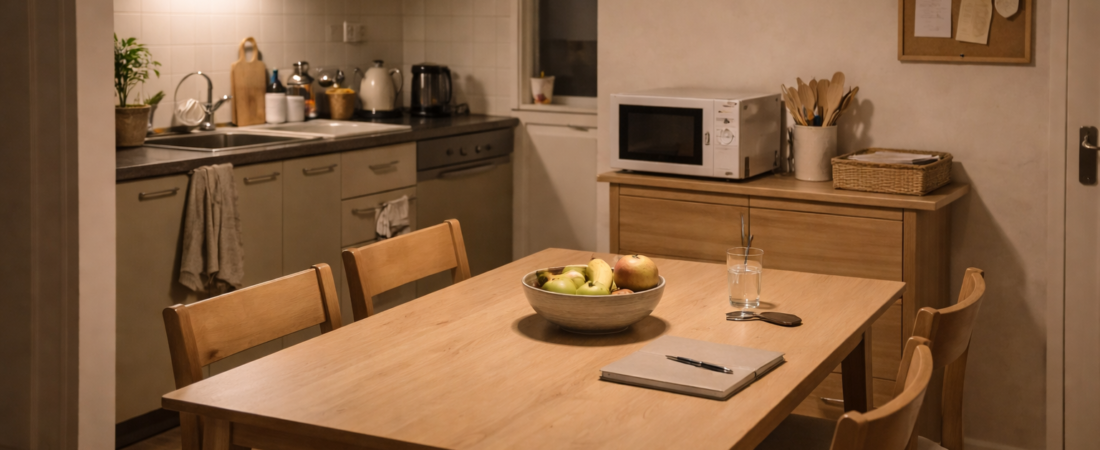
Evening routines are not about productivity or self-improvement.
They exist to reduce friction between today and tomorrow.
Small, repeatable actions done at the end of the day can prevent avoidable decisions, delays, and clutter the next morning. The goal is not to prepare for an ideal day, but to make an ordinary day start more smoothly.
This article focuses on quiet systems that remove work before it appears.
Why Evenings Matter More Than Mornings
Mornings already carry decision pressure.
Time is limited, attention is low, and unexpected tasks appear easily.
Evenings offer more flexibility. Small actions taken then can absorb tomorrow’s effort when it is cheaper to do so. This is not about discipline, but about timing.
A well-designed evening routine does not feel like work. It shortens the mental and physical distance between waking up and starting the day.
Resetting Shared Spaces Before Bed
Shared spaces collect friction overnight if left unresolved.
A brief reset of key areas — such as the kitchen bench, dining table, or entryway — prevents morning clutter from becoming a barrier. This does not require deep cleaning or perfection.
The aim is simple:
• Clear surfaces used first thing in the morning
• Return commonly used items to their usual place
• Leave space open, not styled
Even a five-minute reset can remove multiple small obstacles later.
Preparing the Next Day’s Basics

Preparation works best when limited to essentials.
Laying out clothes, packing a bag, or setting out breakfast items reduces decision-making at a time when decisions feel heavier. This is not about planning the entire day, only removing predictable choices.
Useful preparation focuses on:
• Items that must be used early
• Tasks that repeat daily
• Objects that are easy to forget
If preparation creates pressure, it is too complex.
Closing Loops on Small Tasks
Unfinished micro-tasks create lingering mental load.
Evenings are a good time to close small loops that would otherwise resurface the next day — replying to a short message, putting away a delivered item, or setting out paperwork needed tomorrow.
These tasks are not urgent, but they are persistent. Closing them early reduces background noise and prevents task stacking.
The routine works best when limited to a short, defined window.
Setting the Home Into a Rest State

Homes function better when they shift modes overnight.
Turning off unnecessary lights, closing doors or blinds, and setting appliances into standby positions signals closure. This creates a clear boundary between activity and rest.
A home in rest mode:
• Is quieter and visually calmer
• Requires fewer adjustments in the morning
• Supports better sleep cues
This is a systems decision, not a comfort ritual.
Keeping the Routine Intentionally Small
An effective evening routine is easy to repeat on low-energy days.
One or two consistent actions are more useful than a long checklist. If a routine requires motivation, it will eventually fail.
The measure of success is not completeness, but reliability.
A small routine done most nights reduces more work than an elaborate routine done occasionally.
How This Reduces Tomorrow’s Workload
Evening routines are part of a broader set of everyday home systems that reduce friction by shifting small tasks to calmer moments in the day.
By resetting spaces, preparing essentials, closing small loops, and putting the home into rest mode, tomorrow begins with fewer interruptions. This reduces both physical tasks and mental effort.
The result is not a faster morning, but a steadier one.
That stability compounds quietly over time.