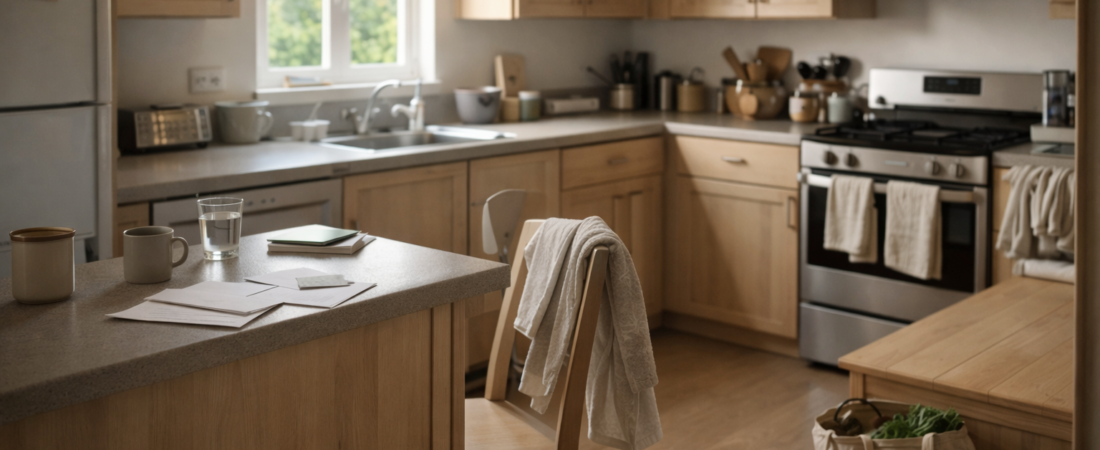
Household systems are small, repeatable ways of doing things.
They might include where keys are placed, how laundry is sorted, when bins are emptied, or how meals are planned. Most systems are not written down. They simply evolve because they make daily life easier.
Over time, however, even well-established systems can stop working as intended.
This does not usually happen suddenly. It tends to show up quietly, as small increases in friction.
Understanding why this happens is the first step toward restoring stability.
What a Household System Is Meant to Do
A household system exists to reduce decision-making and repetition.
When a system is working well:
Tasks are completed with little thought
Items are easy to find
Roles are clear
Daily transitions feel predictable
The goal is not perfection. It is steadiness.
If the system is doing its job, it fades into the background.
Early Signs a System Is Straining
Systems rarely collapse overnight. Instead, small signals appear.
You might notice:
Tasks being skipped more often
Clutter returning to cleared areas
Frequent searching for everyday items
Irritation around routine responsibilities
Repeated conversations about the same task
These signs do not mean failure. They indicate that the current structure no longer matches current conditions.
Why Systems Drift Over Time
Several quiet shifts can cause strain.
Changes in Household Size
A new family member, a child reaching a new stage, or someone moving out changes patterns. A storage method that once worked may now be too small or too complex.
Shifts in Schedule
Work hours, school routines, or health needs can alter timing. A cleaning rhythm that worked on weekends may no longer fit.
Accumulation of Items
Over time, belongings increase. Storage systems built for fewer items become crowded, and retrieval becomes slower.
Increased Fatigue
When energy is lower, systems that rely on multiple steps begin to feel heavy. Even small inefficiencies become noticeable.
None of these changes are dramatic. But each adds friction.
Friction Is the Real Signal
When systems stop working, the clearest signal is friction.
Friction feels like:
Extra steps
Repeated corrections
Small delays
Emotional resistance to starting a task
The home may not look dramatically different. But it feels slightly harder to manage.
This feeling is useful. It shows where adjustment is needed.
Avoiding the Blame Response
When a system falters, it is easy to assume someone is not trying hard enough.
In most cases, effort is not the issue.
The structure itself may no longer fit current needs.
Blame increases tension. Adjustment restores function.
Reviewing Before Replacing
Not every struggling system needs to be replaced.
Sometimes small changes are enough:
Reducing steps
Simplifying storage
Changing timing
Reassigning responsibility
Removing unnecessary items
Before introducing a new solution, it is helpful to ask:
What part of this process feels heavy?
Where does the delay occur?
What has changed since this system began?
Answers to these questions often reveal small, practical adjustments.
Stability Over Reinvention
There is no need for dramatic overhauls.
“Household systems rarely fail suddenly; they tend to drift gradually over time, which is explored further in Home Life Over Time: How Systems Change as Life Changes
Household systems are living structures. They require occasional recalibration.
A small shift can return a system to background efficiency.
The aim is not constant improvement. It is restored ease.
When systems stop working as intended, the problem is rarely the people in the home.
It is simply a signal that conditions have changed.
Responding calmly keeps the home steady, predictable, and supportive over time.